
 By
By The Middle East is currently navigating an incredibly volatile geopolitical landscape in 2026. For residents and international businesses operating in the Gulf, regional stability is of paramount importance. However, on Tuesday, August 18, 2026, the sense of security was abruptly shattered by a massive emergency. Reports regarding sudden Uae missile threats flooded social media and international news networks as authorities issued urgent warnings for civilians to seek immediate shelter. This harrowing event has sent shockwaves across global oil markets, international diplomatic circles, and maritime shipping corridors.
While the nation boasts some of the most advanced military defense architectures in the world, the sheer psychological impact of these incoming projectiles cannot be understated. If you have been following the breaking news regarding these highly alarming Uae missile threats, you might be wondering about the origin of these attacks, the swift response of the military, and what this means for the broader Middle Eastern conflict. In this comprehensive global news breakdown, we will examine the exact timeline of Tuesday’s events, the collapse of international agreements that led to this moment, and the massive economic ripple effects being felt worldwide.
The Emergency Mobile Alerts: A Timeline of Tuesday
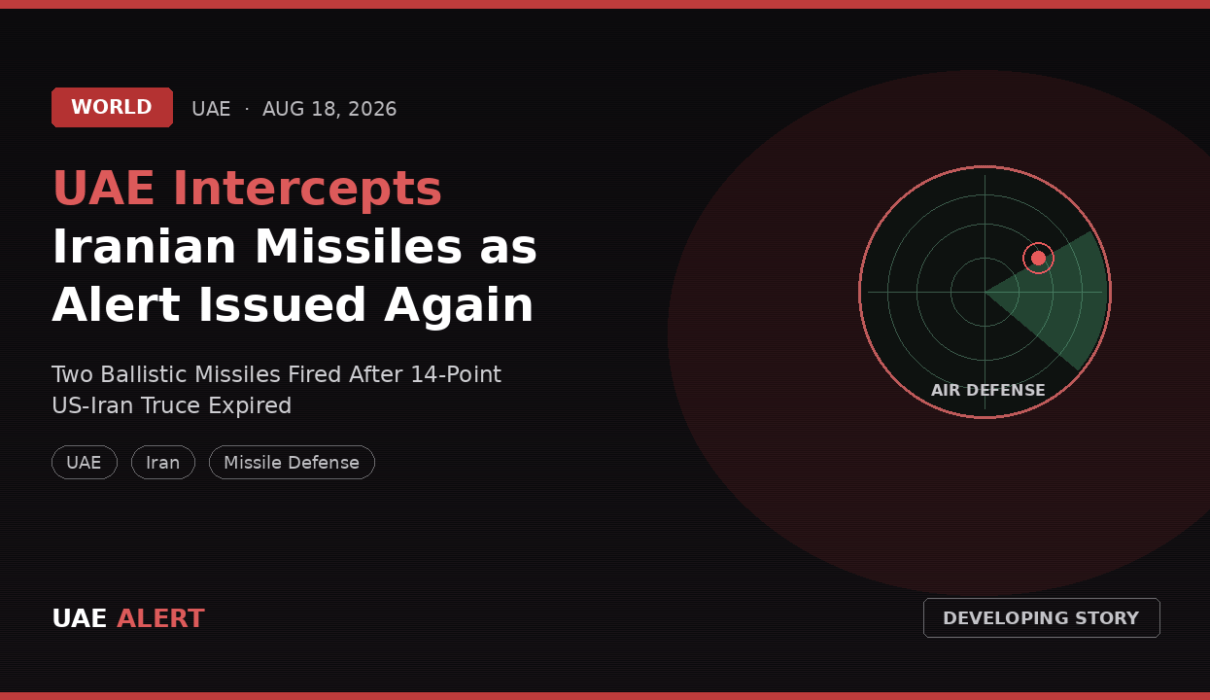
The terrifying situation unfolded rapidly during the daylight hours of Tuesday evening. Across major cities, including Dubai and Sharjah, residents suddenly found their smartphones buzzing with critical emergency notifications. The interior ministry issued a highly urgent phone alert warning the public of potential danger. The message explicitly stated: “Due to the current situation, potential missile threats, immediately seek a safe place in the closest secure building”.
For many residents, this was the first time in months they had received such a dire warning regarding Uae missile threats. The last time the country experienced a similar alert was early May, followed by a false alarm in June. The sudden disruption caused immediate panic, with civilians rushing away from windows and open public areas to find secure concrete shelters. The atmosphere in bustling commercial hubs briefly turned chaotic as the reality of the incoming danger set in.
Tracking the Origin: Two Ballistic Missiles from Iran
As the civilian population took cover, military radar and tracking systems were working at maximum capacity. The United Arab Emirates’ Defence Ministry quickly identified the source and trajectory of the incoming projectiles. According to official statements released on the social media platform X, the authorities confirmed that they had detected two ballistic missiles launched directly from Iran.
The nature of these Uae missile threats specifically involved high-speed ballistic technology, which leaves a very narrow window for interception. Thankfully, the ministry confirmed that neither of the two missiles struck land. The tracking data revealed that the first missile fell harmlessly outside the country’s territorial waters. The second missile, however, landed within the nation’s territorial waters. The ministry’s subsequent assessments indicated that these specific projectiles were likely aimed at disrupting maritime navigation rather than hitting densely populated civilian centers.
Swift Military Interception and the “All-Clear”
The advanced military infrastructure of the country proved its worth during this tense standoff. The air-defense systems were immediately activated to neutralize the incoming danger. During the peak of the Uae missile threats, several residents in Dubai reported hearing unusual, loud sounds echoing across the city.
The Ministry of Defence and the National Emergency Crisis and Disasters Management Authority quickly clarified these reports. They stated that any audible explosions were strictly the result of their own air-defense systems actively intercepting the threats, rather than the impact of offensive enemy strikes. Following the successful containment of the situation, the authorities swiftly lifted the alert. An “all-clear” message was broadcasted to mobile phones, thanking residents for their cooperation and advising them that normal activities could safely resume.
The Geopolitical Context: The Collapsed Agreement
To understand why these severe Uae missile threats have resurfaced, we must look at the fragile diplomatic negotiations that have dominated the year. When the wider Middle East war initially broke out on February 28, the Gulf nation faced the heavy brunt of Iran’s aggression, being targeted by nearly 3,000 missiles and drones.
A temporary reprieve was achieved in June when a memorandum of understanding (MoU) took effect. This interim agreement, negotiated between the US and Iran, was meant to halt the conflict. However, the 60-day window established under this June US-Iran MoU recently expired on Monday. The arrangement essentially collapsed, leading to a massive diplomatic stalemate. With negotiations firmly stuck, the region is once again witnessing a dangerous escalation, manifesting in the direct Uae missile threats we saw on Tuesday.
The Massive Ripple Effect on Global Oil Prices
Any military escalation in the energy-rich Gulf region immediately sends shockwaves through global financial markets. The news of the Uae missile threats was no exception. International commodities traders reacted swiftly to the uncertainty surrounding one of the world’s most critical oil-producing regions.
Following the broadcast of the missile alerts and renewed tensions, international benchmark Brent crude prices experienced a significant jump. By Tuesday, Brent crude climbed near $92 a barrel, officially reaching its highest price this month. The market jitters were further fueled by harsh rhetoric from US President Donald Trump, who lashed out at Tehran as talks remained stalled. These Uae missile threats remind the global economy of how fragile the energy supply chain remains when geopolitical conflicts ignite near crucial maritime chokepoints.
Maritime Dangers: The Strait of Hormuz Crisis
The recent ballistic missile launches are part of a broader campaign of intimidation targeting commercial shipping. The Strait of Hormuz serves as a vital artery for global energy transportation, and it has become heavily militarized. The assessments suggesting that the recent Uae missile threats were aimed at maritime navigation align with a series of recent, highly concerning events.
Just days prior, two tankers owned by Abu Dhabi’s state-owned oil and gas company, ADNOC, were attacked by drones while transiting the Strait of Hormuz. The UAE’s Foreign Ministry strongly condemned these drone strikes, blaming Iran and labeling them as acts of piracy and a flagrant violation of the freedom of navigation. The ongoing Uae missile threats and drone attacks against commercial vessels underscore the immense dangers faced by cargo ships moving through this highly contested waterway.
The international community, including the United Nations, is closely monitoring these maritime disruptions, as any prolonged closure or continued harassment in the Strait of Hormuz could trigger a severe global energy crisis.
Official Reassurance and High Alert Status
In the aftermath of the terrifying Uae missile threats, government officials have taken a strong public stance to reassure both their citizens and international investors. The nation’s leadership understands that projecting strength and stability is essential for maintaining consumer confidence and economic growth.
The Ministry of Defence issued a highly resolute statement confirming that its forces remain on high alert. They emphasized their “full readiness to respond to any threats, and to firmly confront anything aimed at undermining the security of the state”. By demonstrating the successful operational posture of their missile defense architecture, the government aims to ensure the preservation of its sovereignty and the protection of its national capabilities. Furthermore, authorities have strongly urged the public to rely exclusively on official state channels for verified news and to actively avoid spreading unverified rumors regarding the Uae missile threats.
Broader Regional Conflicts: The Yemen Front
The tension in the Gulf is inextricably linked to other ongoing conflicts in the surrounding regions. While the world focused heavily on the Uae missile threats on Tuesday, fighting continued to rage in nearby Yemen.
Forces affiliated with Yemen’s internationally recognized government reported that they successfully thwarted attacks by Iran-backed Houthi rebels in southwestern Yemen. These militants utilized drones, explosives, and artillery in their assaults. Additionally, Houthi forces launched missiles targeting port infrastructure in Mokha and claimed to have directed a drone strike at Saudi Aramco facilities near the border. These synchronized regional hostilities highlight how the Uae missile threats are just one piece of a much larger, highly volatile puzzle involving multiple proxy forces across the Middle East.
Looking Ahead: Diplomacy or Further Escalation?
As the dust settles from Tuesday’s frightening alerts, the massive question looming over the international community is what happens next. The successful interception of the Uae missile threats prevented a catastrophic loss of life, but it has undeniably raised the geopolitical temperature to boiling point.
Efforts are reportedly continuing to reach a diplomatic agreement between Iran and Oman to secure and reopen the Strait of Hormuz. However, with the total collapse of the US-Iran memorandum of understanding, the path to a lasting peace remains incredibly murky. Global superpowers must now urgently engage in intense back-channel diplomacy to de-escalate the situation before a miscalculation leads to an all-out regional war.
For the residents of the Gulf, the memory of the recent Uae missile threats serves as a stark reminder of the fragile peace they live in. While the advanced defense systems have proven their immense capability, the overarching hope remains that diplomacy will eventually prevail over ballistic warfare.
Explore more deeply researched global geopolitics, breaking defense updates, and viral news directly on Around Us World.