
 By
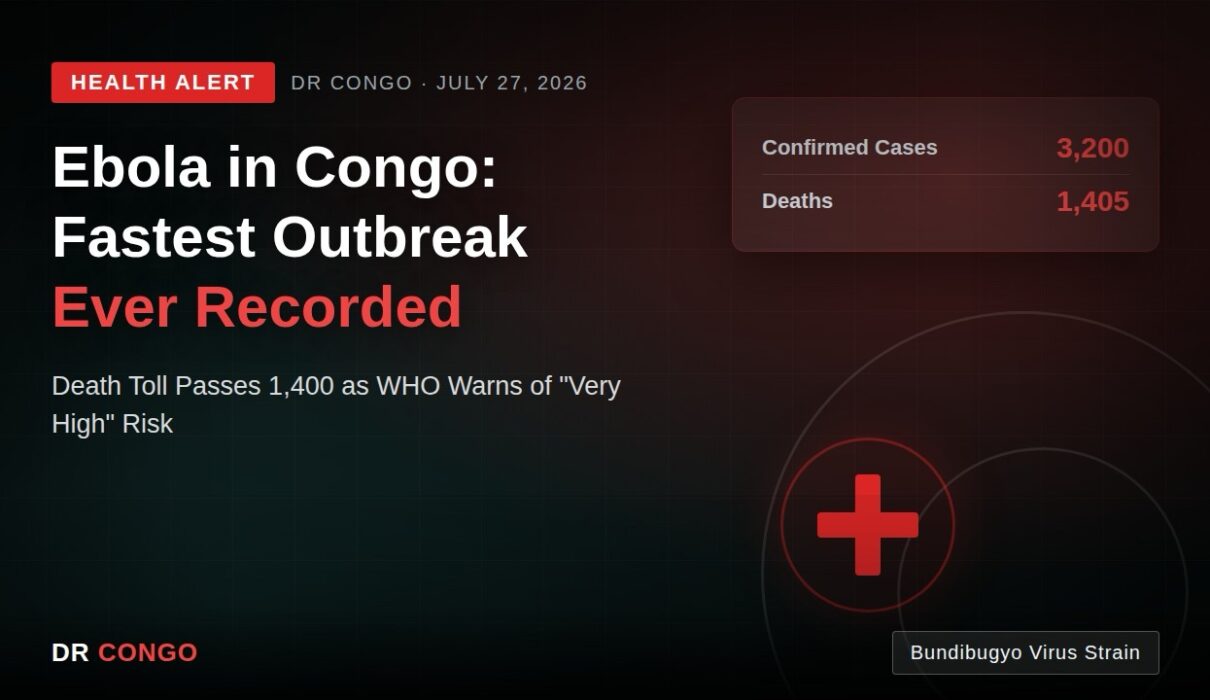
By Ebola Congo outbreak numbers have climbed to a level that even seasoned health officials are calling unprecedented. According to the latest figures released by the Democratic Republic of Congo’s health ministry, the country has now recorded 3,200 confirmed cases and at least 1,405 deaths, with infections surging by roughly 1,000 in just the past ten days alone. What makes this outbreak particularly alarming isn’t just the death toll itself, but the sheer speed at which it’s spreading — this is now officially the fastest-growing Ebola outbreak ever recorded.
Just How Fast Is This Outbreak Moving?
To put the speed of this outbreak into perspective, it helps to compare it with past epidemics. The devastating 2013–2016 West African Ebola epidemic — the largest and deadliest in history, with more than 11,000 deaths — took roughly eight months to reach its first 1,000 deaths. This current outbreak in the DRC crossed that same grim milestone in less than ten weeks.
The CDC has pointed out a similarly striking comparison: this outbreak surpassed 1,000 confirmed cases within just 40 days of the response being activated, compared to roughly 235 days it took during the 2018 North Kivu outbreak in the same country. In my view, that comparison alone tells you everything about why global health agencies are treating this with such urgency.
Ebola Congo Outbreak: Where Did It Start?”
The outbreak was officially declared on May 15, 2026, after a cluster of deaths was reported in the northeastern province of Ituri. The presumed first case is believed to have been a nurse who died at the Evangelical Medical Center in Bunia in late April, though there are indications that earlier cases may have gone undetected due to limited surveillance in the region.
Since then, the outbreak has spread across five provinces in the DRC — Haut-Uele, Ituri, North Kivu, South Kivu, and Tshopo — with Ituri remaining the epicenter, accounting for roughly 90% of all cases and around 80% of deaths. Cases have also crossed into neighboring Uganda, with confirmed infections reported in the capital, Kampala, though officials say all Ugandan cases so far have been linked to travel from the DRC rather than local community spread.
Why This Strain Is Especially Difficult to Fight
Unlike more familiar Ebola outbreaks, this one is caused by the Bundibugyo virus, a rarer variant of Ebola for which there is currently no approved vaccine or specific treatment. This creates a genuinely difficult situation for health workers on the ground — not only are they racing against a fast-moving virus, but they’re doing so largely without the tools that have helped contain more common Ebola strains in the past.
The Bundibugyo variant is also notoriously hard to diagnose, partly because it’s rare enough that manufacturers don’t routinely produce large quantities of the specialized test kits needed to detect it. That diagnostic bottleneck has real consequences — more than 60% of deaths in this outbreak are reportedly occurring in the community before patients even reach a treatment facility, suggesting many infections aren’t being caught and isolated in time.
Conflict Is Making an Already Difficult Situation Worse
Ituri province, the epicenter of this outbreak, has been dealing with armed conflict for more than 30 years, and more than 900,000 people there currently live in displacement camps. That instability has directly hampered the outbreak response — health facilities and response teams have faced attacks, and some frontline workers have gone on strike over unpaid wages, further disrupting containment efforts in certain areas.
There’s also an economic factor at play that’s easy to overlook. Artisanal gold mining is a major part of the local economy in the region, and it draws large numbers of informal, highly mobile workers — exactly the kind of population movement that can accelerate the spread of a virus like Ebola between communities.
Contact tracing, which is critical for containing any Ebola outbreak, is also falling short. Health officials say only around 77% of known contacts are currently being monitored nationwide, well below the 95% target considered necessary to interrupt transmission chains effectively.
Global Risk Assessment: What Health Agencies Are Saying
The World Health Organization currently assesses the risk from this outbreak as “very high” within the DRC and “high” in Uganda and neighboring countries, citing cross-border movement and sustained transmission in eastern Congo. Globally, however, the WHO continues to describe the overall international risk as low.
It’s worth understanding why. Ebola spreads through direct contact with the bodily fluids of an infected person — not through the air like a respiratory virus — which makes it considerably harder to transmit compared to something like COVID-19 or influenza. The CDC has echoed this same assessment, noting that as of now, no cases connected to this outbreak have been confirmed in the United States, and the likelihood of the virus spreading there remains very low.
Some Signs of Hope Amid the Crisis
Despite the grim numbers, there are a few encouraging developments worth noting. Officials say the sharp rise in case numbers does appear to be slowing in some areas, even though the outbreak has clearly not yet peaked. In Kisangani, a major city in Tshopo province, the WHO reported that all five confirmed cases so far have been imported from Ituri, with no secondary community transmission detected — a sign that rapid response teams deployed there may be working.
On the treatment front, Oxford University announced that the first group of volunteers has now received an experimental vaccine specifically targeting the Bundibugyo strain, marking an important early step toward developing a tool that’s been missing throughout this entire outbreak.
What Happens Next?
Health officials, including Africa CDC Director-General Dr. Jean Kaseya, have called for intensified international support to slow the outbreak before it potentially becomes, in his words, the worst Ebola outbreak the world has ever documented. Whether that warning proves accurate will likely depend on how quickly contact tracing, healthcare worker support, and vaccine trials can scale up in the coming weeks.
Final Thoughts
The Ebola Congo outbreak represents a genuinely serious public health emergency — not just because of the rising death toll, but because of how many factors are working against containment at once: an untreatable virus strain, ongoing armed conflict, unpaid healthcare workers, and a highly mobile local population. At the same time, it’s worth remembering that global health risk remains low, and organizations like the WHO, MSF, and Oxford researchers are actively working to bring this outbreak under control.
What do you think it will take to finally slow this outbreak down — more international funding, faster vaccine rollout, or resolving the conflict in eastern Congo first? Let us know in the comments.
Sources: Al Jazeera, NPR, PBS News, UN News, CDC, Doctors Without Borders (MSF)