
 By
By If you have been scrolling through global tech news lately, you have probably noticed a heavy cloud hanging over the enterprise software industry. The latest shockwave comes from tech giant Oracle. News of the recent Oracle layoffs has left many employees, IT professionals, and market watchers asking the same question: What exactly is going on inside the company?
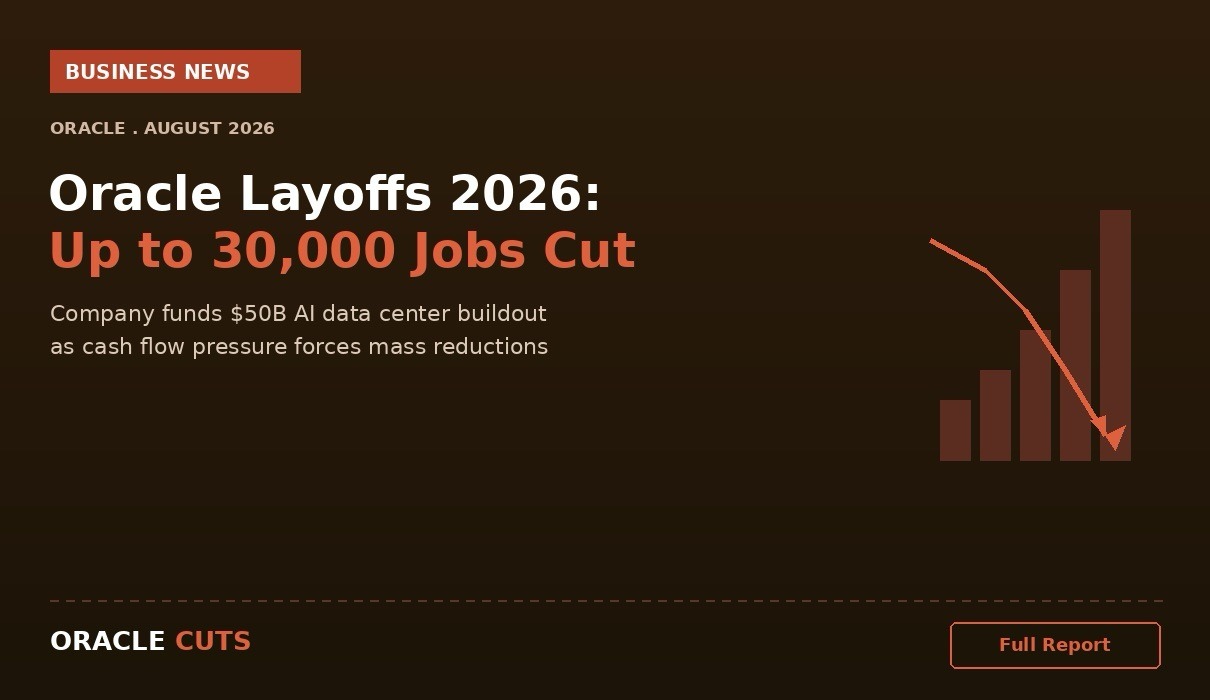
Job cuts in the tech world are always tough to read about, but the situation at Oracle is different. This is not a simple case of a company running out of money. Recent reports confirm that Oracle reduced its total headcount by approximately 21,000 employees during the 2026 fiscal year. That is a massive 13% reduction of its global workforce.
Instead of a traditional financial crisis, this is a massive, calculated shift in how the enterprise giant plans to do business. Oracle is moving its capital, time, and engineering talent away from older software models and pushing aggressively into Artificial Intelligence (AI) and cloud infrastructure. In fact, in its latest annual report, Oracle explicitly acknowledged that the adoption of AI technologies contributed to these workforce reductions.
Whether you work in the tech industry, run a digital news platform, or just like keeping up with business trends, understanding this shift is crucial. Let’s break down the real story behind these job cuts, look at who is being affected, and figure out what it all means for the future of tech jobs.
The Real Story Behind the Oracle Layoffs
When a massive global company decides to let go of 21,000 workers and spend $1.84 billion in severance costs, there is never just one simple reason. For Oracle, the decision comes down to a few major changes in the tech landscape. They are trying to catch up with cloud rivals, build heavy hardware infrastructure, and save money all at the same time.
How the AI Push is Driving Oracle Layoffs
To understand the current situation, you have to look at the cloud computing wars. Oracle Cloud Infrastructure (OCI) is fighting for market share against heavyweights like Amazon Web Services (AWS), Microsoft Azure, and Google Cloud. But here is the catch: building the infrastructure for modern AI is extraordinarily expensive.
Companies need giant data centers, highly advanced graphics processing units (GPUs), and massive amounts of electricity to run AI models. This requires tens of billions of dollars upfront. To free up that kind of cash without taking on massive debt, Oracle leadership had to look at their current budget and find ways to trim costs. In the corporate world, the fastest way to free up capital for hardware investment is often by reducing headcount in non-core departments.
Shifting Away from Legacy Software
For decades, Oracle made its billions by selling traditional databases and on-premise software. Companies would buy the software, install it on their own local servers, and pay Oracle for yearly maintenance and support.
But the enterprise world has moved on. Today, businesses want fully managed cloud environments and software that updates automatically over the internet. Because of this, the demand for traditional, manual system maintenance has dropped. Oracle simply does not need as many employees dedicated to these older, legacy products anymore. As the product lineup changes, the workforce has to change with it.
Internal Automation Replacing Routine Jobs
It is slightly ironic, but tech companies are now using the very AI tools they sell to replace some of their own internal workflows. Modern AI assistants can debug code, manage basic customer support tickets, and monitor system health automatically. Tasks that used to require a dedicated team of junior engineers or tier-one support reps can now be handled by automated scripts. This increased internal efficiency means fewer human hands are needed for routine maintenance tasks.
Which Departments Are Hit Hardest by Oracle Layoffs?
Layoffs are rarely spread evenly across a company. Usually, leadership targets specific divisions that no longer fit the company’s long-term vision. Based on industry reports and internal discussions, the Oracle layoffs have heavily impacted a few specific areas:
- The Health Division (Cerner): A few years ago, Oracle bought Cerner, a massive electronic health records company for $28 billion. After a big acquisition, companies usually realize they have two of everything. A lot of the current job cuts are a result of finally combining these teams and trimming the excess.
- Customer Support and Account Management: As Oracle pushes more customers toward automated, self-service cloud tools, the need for traditional, phone-based technical support has dropped significantly.
- Old-School Sales Teams: The days of selling physical software licenses are fading. Sales teams that focused entirely on on-premise solutions have found themselves on the chopping block, while quotas are shifted toward selling AI and cloud packages.
- Non-Technical Roles: Recruiting, regional HR, and general administrative roles have also been downsized. When a company is hiring less overall, they do not need as many recruiters on the payroll.
Meanwhile, if you are an engineer specializing in cloud security, machine learning, or low-level infrastructure, your job is likely very safe. In fact, Oracle is still actively hiring for those specific roles.
How Oracle Layoffs Reflect a Global Tech Shift
It is easy to look at this situation and think it is just an “Oracle problem.” But if you zoom out, you will see that these job cuts represent a massive shift across the entire global tech industry. The rules of hiring are changing in real-time.
The End of Mass Generalist Hiring
Just a few years ago, tech companies were in a hiring frenzy. They would hire thousands of “generalist” software developers just to have smart people in the building, working on minor feature updates. That era is officially over. Today, companies want highly specialized talent. They are looking for people who know how to build distributed systems, manage network architecture, and run machine learning operations.
The Cost of Innovation
Building software used to be relatively cheap compared to building physical products like cars or airplanes. You just needed smart people and computers. But AI is different. AI requires physical hardware—massive servers and cooling systems. Because the cost of building this tech is so high, tech companies have to run “leaner” corporate teams. They cannot afford to have thousands of employees working on side projects anymore.
A Survival Guide: Navigating the Market Amid Oracle Layoffs
If you are a tech worker reading this, news like the Oracle layoffs can cause a lot of anxiety. Whether you were personally affected, know someone who was, or just want to protect your own career, there are practical steps you can take right now to stay valuable in this shifting market.
1. Update and Modernize Your Skill Set
The tech industry does not wait for anyone. If your resume highlights skills from five years ago, it is time for an upgrade.
- Focus heavily on cloud experience. Make sure you have hands-on practice with OCI, AWS, Azure, or Google Cloud.
- Learn automation tools. Show future employers how you can use scripting languages to make workflows faster and cheaper.
- Get certified. A recognized certification in cloud architecture or enterprise security can make your resume stand out in a crowded pile.
2. Protect Your Professional Network
When a wave of layoffs hits, your network becomes your most valuable asset. Do not wait until you need a job to start talking to people. Reach out to former colleagues, college friends, and old managers. Grab a virtual coffee. Engage with open-source communities and tech groups online. Often, the best jobs are never posted on public job boards; they are filled through personal recommendations.
3. Handle the Exit Gracefully (If Affected)
If you do find yourself caught in a corporate restructuring, take a deep breath. Before you lose access to your company systems, make sure you download copies of your pay stubs, performance reviews, and tax documents. Read your severance package carefully before signing anything, and do not be afraid to ask for a positive recommendation letter from your direct manager.
Final Thoughts on the Future of Tech
The Oracle layoffs are tough, and the human impact of losing a job should never be minimized. Real people are having their lives disrupted. However, from a big-picture industry perspective, this is not the end of the tech boom—it is just an evolution.
The demand for technology is not going anywhere. Businesses still need secure cloud hosting, fast data processing, and smart AI models to survive. The money is simply moving from old technology to new technology.
For everyday tech professionals, the takeaway is clear: adaptability is your best career insurance. The professionals who are willing to learn new cloud-native systems, embrace AI tools, and continuously update their skills will not just survive this transitional period—they will thrive in the new digital economy.