
 By
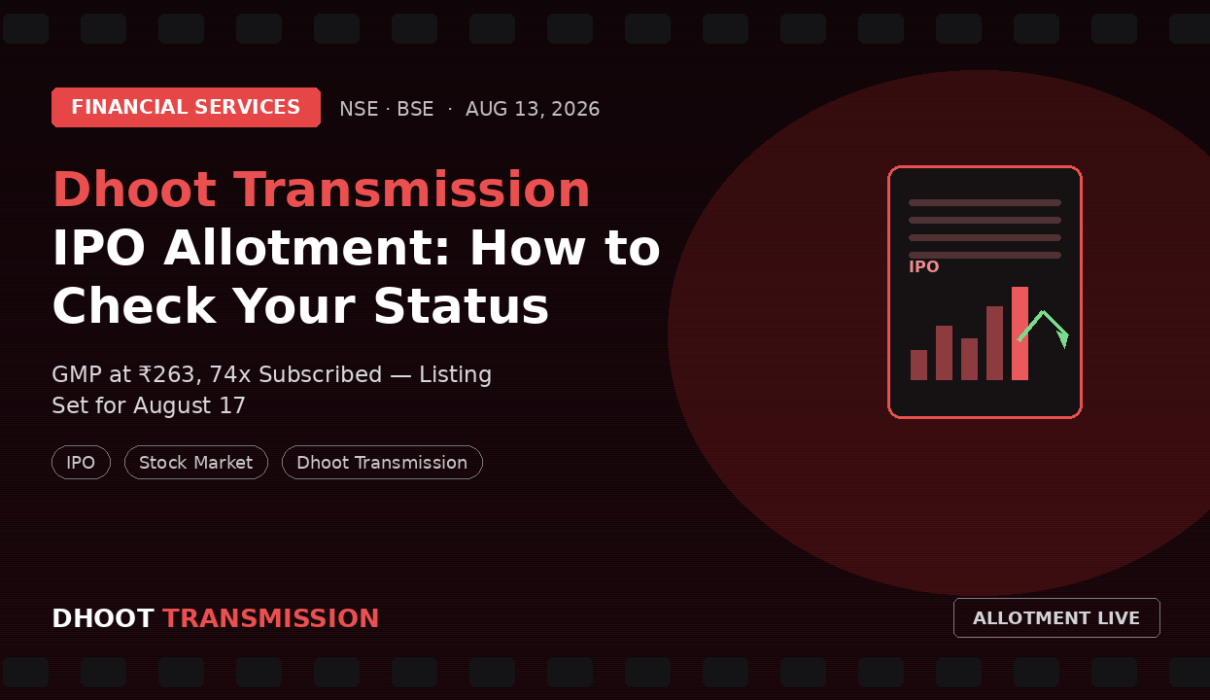
By The Indian stock market has been witnessing an incredible wave of new public offerings this year, and August 2026 is no exception. Retail investors, high-net-worth individuals, and institutional buyers are all keeping a close eye on the latest market entrants. Among the most talked-about public issues right now is the highly anticipated offering from one of the leading automotive component manufacturers. If you have applied for shares in this company, checking the Dhoot transmission ipo allotment status is likely your top priority today.
Whenever a massive industrial player decides to go public, the buzz in the primary market hits a fever pitch. Investors have locked in their capital, hoping for strong listing gains and long-term wealth creation. In this comprehensive guide, we are covering everything you need to know about the company’s background, the current grey market trends, and exactly how you can check your Dhoot transmission ipo allotment status without any hassle. Let us look at why this specific public issue has created such a massive stir across trading circles.
Why Everyone is Tracking the Dhoot transmission ipo allotment status
Before you rush to find out your Dhoot transmission ipo allotment status, it is important to understand why so many people applied for this issue in the first place. Dhoot Transmission has established itself as a massive player in the automotive sector. They specialize in manufacturing wiring harnesses, electronic sensors, and various other essential components used extensively in two-wheelers, three-wheelers, and commercial vehicles.
With the rapid global shift toward electric vehicles (EVs), companies that supply electronic components and advanced wiring solutions are seeing unprecedented growth. The automotive supply chain relies heavily on trusted manufacturers who can deliver quality products at scale. Because this company supplies components to some of the biggest automobile brands in the world, market experts have maintained a highly positive outlook on its future profitability. This strong industry position is the primary reason why tracking the Dhoot transmission ipo allotment status has become a trending topic among active retail investors this week.
Key Dates and Issue Details
To make sense of the allotment process, you need to be aware of the timeline. A public issue goes through several phases, starting from the opening date, closing date, the basis of allotment, and finally the listing on the stock exchanges.
The bidding period saw overwhelming participation from all categories of investors. The Qualified Institutional Buyers (QIB) segment was heavily oversubscribed, and the retail category saw massive participation from everyday traders. Once the bidding closes, the registrar takes a few days to finalize the basis of allocation. The day the Dhoot transmission ipo allotment status is officially declared is when the registrar matches the number of available shares with the number of valid applications. If the issue is highly oversubscribed, retail investors receive shares through a computerized lottery system, making the entire process purely based on luck.
Step-by-Step Guide to Check Dhoot transmission ipo allotment status
If you are wondering if you got lucky in the lottery draw, checking your allocation is a very simple process. You do not need to call your broker or wait for an email. There are two primary official methods to verify your Dhoot transmission ipo allotment status online in a matter of seconds.
Method 1: Through the Official BSE Website
The Bombay Stock Exchange (BSE) provides a dedicated tool for retail investors to check the status of any ongoing public issue. You can quickly verify your Dhoot transmission ipo allotment status by visiting the official BSE portal.
- Open your web browser and navigate to the official BSE India website.
- Look for the “Investors” section and click on the “Status of Issue Application” page.
- Under the issue type, select “Equity”.
- A drop-down menu will appear showing the names of all active public issues. Select the correct company name from this list.
- You will now be asked to enter your specific application number or your PAN (Permanent Account Number).
- Click on the “Search” button.
- Your screen will instantly refresh and display the exact number of shares allotted to your account.
Method 2: Via the Official Registrar Portal
Another quick way to check the Dhoot transmission ipo allotment status is directly through the website of the official registrar appointed for this issue. Registrars like Link Intime or KFintech handle the backend processing of all applications.
- Visit the official website of the issue’s designated registrar.
- Navigate to their specific IPO Allotment Status page.
- Select the company name from the drop-down list (this option usually appears only after the allocation is finalized).
- Choose your preferred identification method. You can use your PAN, your Demat Account details (DP ID / Client ID), or your application number.
- Enter the selected details accurately.
- Fill in the security captcha code shown on the screen.
- Hit the “Submit” button to view your application results.
Grey Market Premium (GMP) Trends and Predictions
While waiting for the Dhoot transmission ipo allotment status, investors are obsessively tracking the Grey Market Premium (GMP). For those new to the stock market, the grey market is an unofficial, unregulated market where IPO shares are bought and sold before they are officially listed on the national exchanges.
The GMP acts as a strong indicator of how the stock might perform on its listing day. If a stock has a high GMP, it usually means that buyers are willing to pay a premium over the issue price because they expect high demand on listing day. Currently, the grey market indicators for this specific automotive component maker are looking very robust. Brokers are reporting heavy buying interest in the unlisted space. However, it is crucial to remember that grey market numbers can fluctuate wildly based on global market sentiments, and they should not be the sole reason for holding or selling a stock.
What to Do After Checking Your Dhoot transmission ipo allotment status
Once you confirm your Dhoot transmission ipo allotment status, you must prepare for the next steps based on the outcome.
If you are allotted shares, congratulations! You have secured equity in a highly anticipated company. The next step is simply to wait. Within a day or two after the allocation is finalized, the shares will be electronically credited to your linked Demat account. You will receive an SMS and an email confirmation from your depository participant (CDSL or NSDL) confirming the credit. From there, you can decide whether to sell the shares on the listing day to capture quick listing gains or hold them as a long-term investment.
If you check your status and see that zero shares have been allotted, do not panic. This is extremely common in oversubscribed issues. The registrar will automatically initiate a refund mandate. If you applied via UPI, the blocked amount in your bank account will be released, usually within 24 to 48 hours. You do not need to take any manual action to get your money back.
Financial Performance and Future Outlook
Understanding the financial health of the business helps you make an informed decision on listing day. The company has reported consistent year-on-year revenue growth over the last three financial years. Their profit margins have expanded significantly due to operational efficiencies and the addition of major global clients to their portfolio.
They have also been actively expanding their manufacturing capabilities, setting up new plants to cater to the growing demand for smart vehicle components. A portion of the funds raised through this public offering will be utilized to repay existing debt, which will make the company leaner and more profitable in the upcoming quarters. This strong financial health makes the Dhoot transmission ipo allotment status highly anticipated by institutional investors who are looking for stable, long-term portfolio additions.
Frequently Asked Questions (FAQs)
When will the Dhoot transmission ipo allotment status be released?
The allocation is typically finalized three working days after the bidding process closes. You can check the official registrar website late in the evening on the specified allotment date.
What happens if my Dhoot transmission ipo allotment status shows zero shares?
This simply means that you were not selected in the computerized lottery draw. Your blocked application money will be completely unblocked and released back into your bank account within a couple of days.
Can I check my Dhoot transmission ipo allotment status using just my PAN?
Yes, you do not need to memorize your long application number. Both the BSE portal and the official registrar’s website allow you to search your allocation using just your Permanent Account Number (PAN).
Should I hold the shares for the long term?
This depends entirely on your personal risk appetite. While the company has solid fundamentals and a growing market share in the EV components space, you should consult with a registered financial advisor before making any long-term holding decisions.
As the listing date approaches, the excitement in the primary market continues to build. Whether you are aiming for quick listing day profits or looking to build a robust, long-term equity portfolio, staying informed is the key to stock market success. Keep a close watch on your bank messages for any unblocking alerts, as they are often the first informal indicator of your application results.
Explore more in-depth analysis and viral financial stories directly on Around Us World.